A plowed driveway does not help if the road to it is closed. Neither county road commission plows its seasonal roads from November through April, and on the Leelanau shore a lot of houses sit at the end of one, or down a private road the county never had.
Traverse City Snow Plowing is a referral service. The road work on this page is arranged with independent contractors who plow under their own names and carry their own insurance; the site itself runs no equipment and holds no contract with the road commissions.
“The Road Commission does not maintain or snowplow seasonal roads between the months of November - April. NO maintenance is conducted on these roads during these months. Therefore, a seasonal road may not be open to public travel during this time. Private landowners need to perform their own snow removal.”
Grand Traverse County Road Commission, Road MaintenanceThe same page has a line for anyone buying property on such a road: “be prepared to add some money to your budget for snowplowing.” That is a public agency telling buyers, in plain language, that the winter access is a private cost.
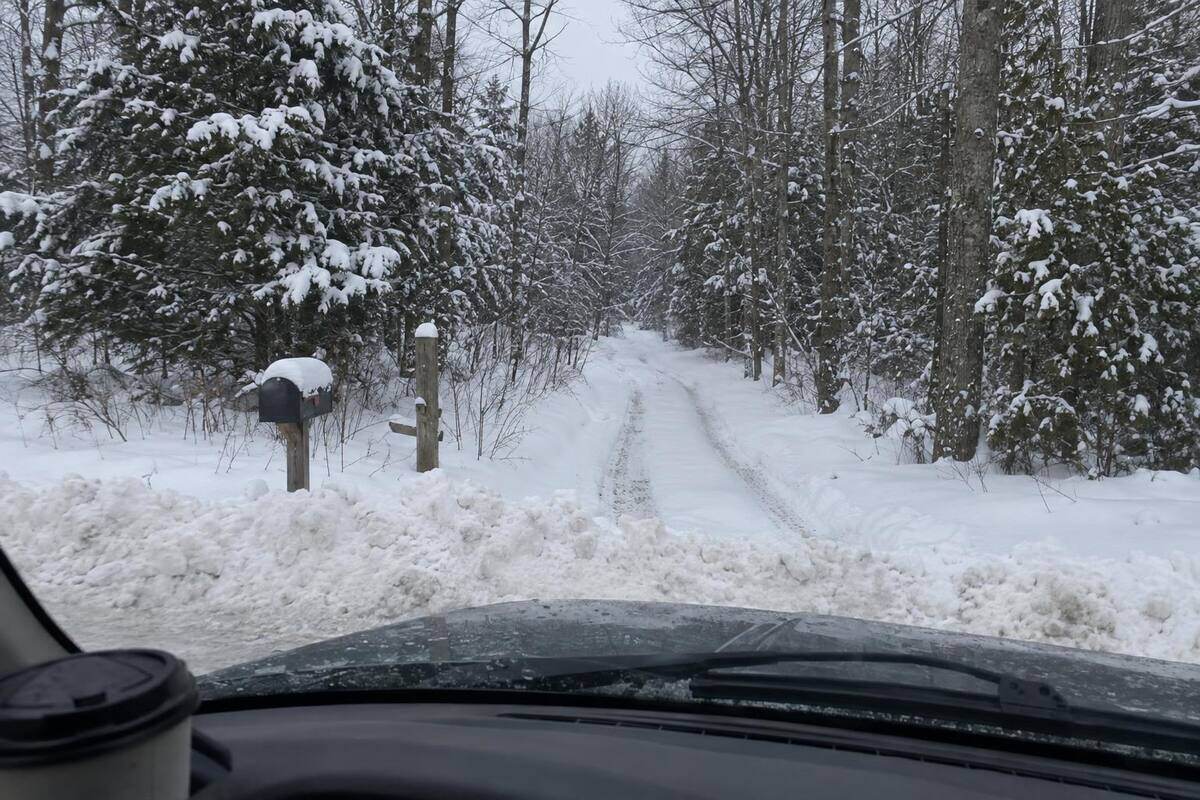
This is the fact that changes the whole conversation for a second home. When the road is seasonal, the house is not just unshoveled in February. The road to it is unplowed too, so the owner cannot drive up to check on it, the propane truck cannot deliver, and an emergency vehicle may not get through. The vacant-property page is built around that problem.
The Leelanau County Road Commission lists among its jobs “establishing a seasonal road system for roads that are closed to public travel from November through April.” The county’s network runs to 598 miles: 171 of paved primary road, 319 of paved local road, 45 of gravel, and 63 miles of seasonal road. M-22 and M-72 are plowed separately, under contract with MDOT.
The commission’s April 2018 policy on unimproved roads goes further. Those roads get “no maintenance during the winter months,” and the commission will consider winter maintenance “only where the entire cost to improve them to current Road Commission standards is paid by others.” In other words, getting an unimproved road onto a winter route is not a matter of asking; it is a matter of paying to bring the whole road up to standard first.
Leelanau is also where the snow is heaviest. The county’s own road commission puts its average at 120 to 140 inches, and the long-record station at Maple City averages 142.1. See where the snow falls for the station behind your community.
Separate from seasonal county roads are the roads that were never public at all. Glen Arbor Township’s master plan notes “many private roads that provide access to property,” and lanes like that are a familiar sight on the Leelanau shore: a lane off the county road serving several houses, owned in pieces by the people who live on it, or a long shared drive that splits near the water.
Who plows a private road is settled by the owners on it and any road agreement or association they have. If you are not sure whether your road is private, seasonal or a regular county road, ask the road commission how it is classified before you arrange anything. It is the one answer everything else depends on.
The contract has to say where the plowed road starts and stops: from which county road, past which houses, to which drive. A length in writing avoids a truck that turns around one house short.
A plow truck needs somewhere to turn at the far end. On a dead-end seasonal road that may be a widened spot someone has to agree to keep open all winter.
Several owners on one road usually split the cost of the road and contract their own driveways. Decide who holds the contract and who the operator calls with a question.
A narrow road through trees runs out of room for snow faster than a driveway. Agree on whose land it can be pushed onto, and keep it off culverts and away from anyone’s mailbox.
Many of these roads are gravel or a two-track. Plowed without care they lose stone to the banks, and a thaw followed by a freeze locks in ruts. Ask who fixes the surface in spring.
The road has to take a delivery truck to the tank and let a fire engine or ambulance through. That is a width and a timing commitment, not only a depth trigger.
Because a road contract carries more length, more stacking and more coordination than a single drive, it is quoted as its own job. The pricing page explains the structure, and the long-driveway page covers the drive at the end of the road.
Arrange it in the fall. Contracts here are sold in October and November and routes fill, and a road contract takes longer to set up than a drive. More on timing on the contracts page.
Describe the road, who lives on it and who needs to get through, and you will be introduced to an operator who plows that part of the county.
Call (231) 715-4148 Get a Season Price Traverse City